
Shopping Cart
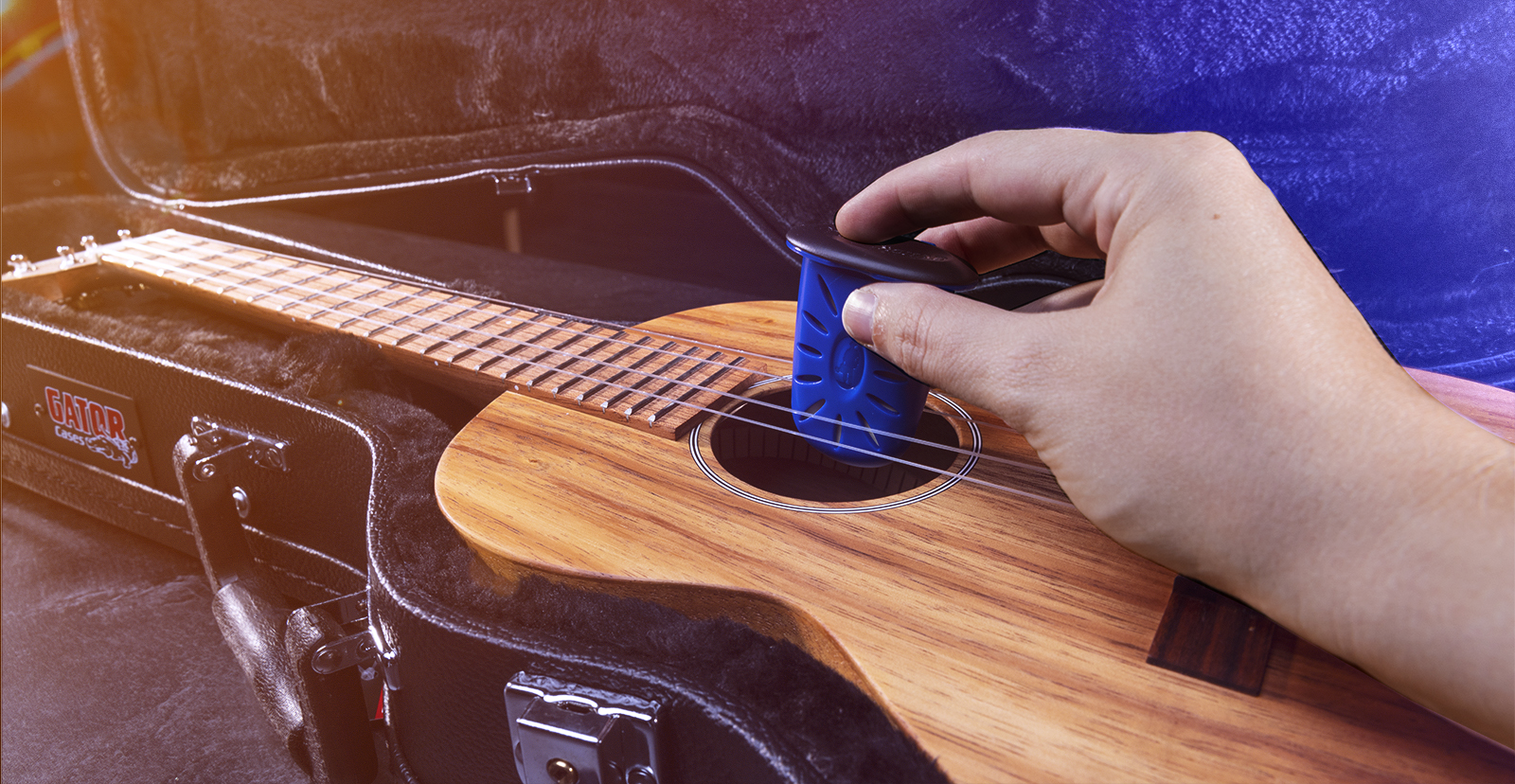
A ukulele is a delicate thin-wood instrument, glued and held under tension by its strings. Storing it well and changing strings in time is already most of the care — whether you have an entry-level model or a fine instrument.
Storage and transport
- Hard case preferably, or a well-padded gig bag with neck support.
- Match the case to size: soprano, concert, tenor, or baritone.
- Keep inside a spare set, a winder, small cutters, a tuner, and a cloth.
Temperature and humidity
Same rule as for you: no attic, cellar, shed, or car in full sun. A sudden swing in temperature or humidity makes wood swell / shrink: cracks, a shifting neck, action that becomes unplayable.
Aim for about 40–50% relative humidity. A hygrometer in the case plus a humidifier (sponge / dedicated system) in dry periods avoids many nasty surprises. In very dry climates (winter heating), it is often essential.
Cleaning
- Clean hands before playing.
- Cloth after every session (strings + fretboard).
- At string change: lemon oil / conditioning oil on unfinished fretboard only; light polish on gloss finish only.
Changing strings
About every six months, or as soon as the tone dies / tuning will not hold. Depending on the bridge (tie-block, slots, pins), installation varies a little — the principle stays the same: lock well, then tension.
Nylon stretches a lot: stretch and retune several times. Keep a spare set in the case: strings always break at the wrong moment. A well-cared-for ukulele will repay you for years.