
Shopping Cart
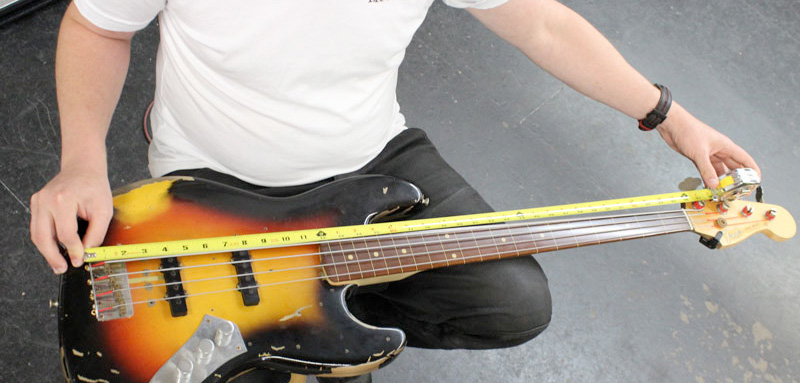
Two classic bass mistakes: a gauge unsuited to your hand / style, and strings too short (or too long) for the scale. Here is how to avoid both without getting lost in catalogues.
Measure scale length first
Measure from nut to bridge saddle (vibrating string length). Short, medium, long, or extra-long: the maker lists the matching length. On a 5-string at 35" (~89 cm), a standard “long scale” set can be tight: better check before buying.
- Short: about 76–79 cm
- Medium: 81–84 cm
- Long: 86–89 cm (the most common)
- Extra-long: beyond that
A scale that is too short and you will not install correctly. A scale that is too long leaves excess, but the real risk is mainly a set that is too short.
Choosing gauge
- Light: comfort, easier slap, less fatigue — ideal to start.
- Medium: versatile, good tension / tone balance.
- Heavy: more bottom end, more stable low tunings, stronger fingers required.
If you tune down, go a bit heavier to keep playable tension. If you move to a clearly thicker set, a neck / action setup may be needed.
In practice
Note your bass’s scale and current gauge (often printed on the packaging). Change one criterion at a time. That is the simplest way to find “your” set — without multiplying bad trials.
Source : S.I.T. Strings – How to Choose Electric Bass Strings